
Wild vs. Cultivated Yarrow: Why These Two Hydrosols Look So Different
Have you ever distilled the same herb from different sources and ended up with completely different results?
That's exactly what happened during one of our recent yarrow distillation experiments.
Using the same LETIME ADI (Automatic Distiller & Infuser), the same amount of water, the same distillation settings, and the same procedure, we distilled two batches of yarrow.
One batch was made from wild-crafted yarrow.
The other was made from cultivated yarrow.
The results were surprisingly different.
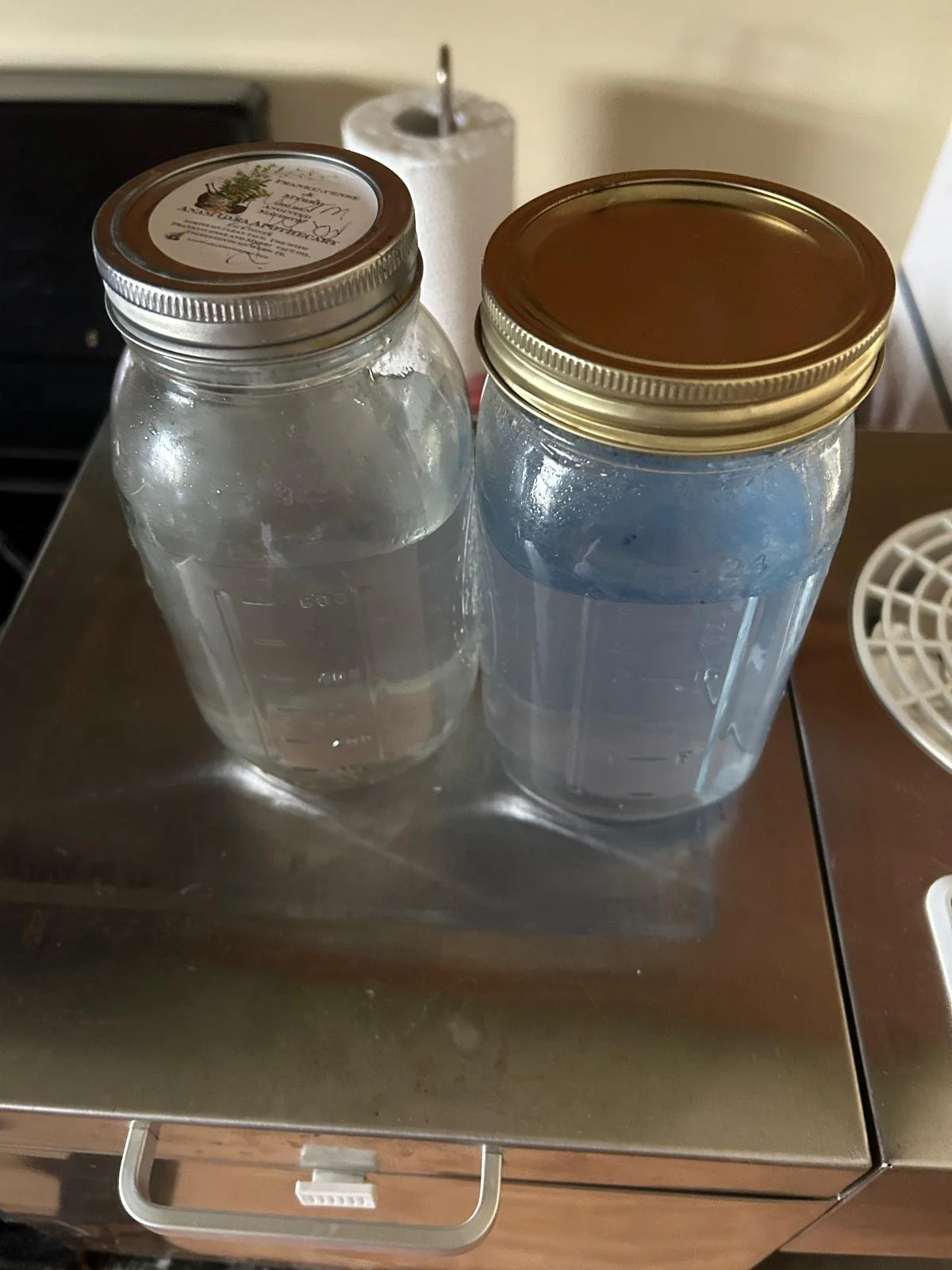
Credit: Amye
A Visible Difference
The cultivated yarrow produced a clear hydrosol with little visible essential oil.
The wild-crafted yarrow, however, produced a hydrosol with a beautiful blue tint. Looking closely, tiny droplets of blue essential oil can be seen floating in the receiver.
(Insert close-up image of the blue hydrosol in the collection container.)
This striking color is one of the fascinating characteristics sometimes found in yarrow essential oil.
Why Is the Wild Yarrow Blue?
The blue color is associated with chamazulene, a naturally occurring compound that forms during steam distillation from precursor compounds found in some yarrow plants.
Chamazulene is also responsible for the deep blue color seen in certain chamomile essential oils.
Not every yarrow plant produces the same amount of this compound. In fact, some produce very little.
This explains why one hydrosol may appear crystal clear while another carries a noticeable blue hue.
Why Can Two Yarrow Plants Produce Different Results?
Although both plants are called yarrow (Achillea millefolium), many factors influence their chemical composition.
These include:
Wild versus cultivated growing conditions
Soil type and mineral content
Climate and rainfall
Elevation
Harvest season
Plant maturity
Drying methods
Genetic variations (chemotypes)
These variables affect the amount and composition of volatile compounds that become essential oil during steam distillation.
In other words, the differences you observe in the final hydrosol often begin long before the distillation process.
Why Consistency Matters in Herbal Experiments
When comparing herbs from different farms, harvests, or growing environments, consistency in the extraction process is essential.
If every batch is distilled under different conditions, it becomes difficult to know whether the observed differences are caused by the herbs—or by the equipment.
Using the ADI Automatic Distiller & Infuser helps eliminate that uncertainty.
Because temperature control, distillation settings, and operating procedures remain consistent from batch to batch, you can confidently compare:
Wild-crafted vs. cultivated herbs
Different suppliers
Spring vs. autumn harvests
Fresh vs. dried material
Organic vs. conventionally grown herbs
Different drying techniques
Different plant varieties
The ADI becomes more than a hydrosol maker—it becomes a reliable research tool for herbal experimentation.
A Great Tool for Herbal Learning
Whether you're a home herbalist, educator, small farm, skincare maker, or essential oil enthusiast, experimenting with herbs from different sources can deepen your understanding of plant chemistry.
Some herbs may produce:
More essential oil
Different aromas
Different hydrosol characteristics
Different colors
Different therapeutic profiles
Every distillation teaches something new.
Final Thoughts
Nature rarely produces identical plants.
Even when two herbs share the same common name, their chemistry may differ significantly depending on where and how they were grown.
That's one reason herbal distillation is so fascinating.
By using a consistent distillation system such as the ADI, you can explore these natural differences with confidence and discover how the origin of your herbs influences the final hydrosol and essential oil.
Sometimes, the most valuable discoveries come from simply asking:
"What happens if I distill the same herb from a different source?"
Interested in experimenting with your own herbs?
The ADI Automatic Distiller & Infuser makes it easy to produce hydrosols, essential oils, alcohol tinctures, and infused oils with consistent, repeatable results. Whether you're comparing herbs from different farms or developing your own botanical products, the ADI provides a dependable platform for exploration and learning.